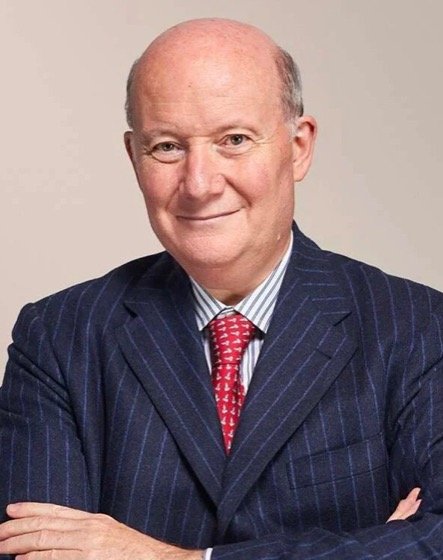
Massimo
Introvigne
Sociologist of religion and executive director of CESNUR, the Center for Studies on New Religions, based in Turin, Italy.
Academic profile ↗New publication · CESNUR · 2026
Edited byMassimo Introvigne
and Karolina Maria Kotkowska
Discover his ideas through his writings. Academic studies exploring his spiritual, literary, and philosophical world.
Complete English PDF · Free access · No registration
About the book
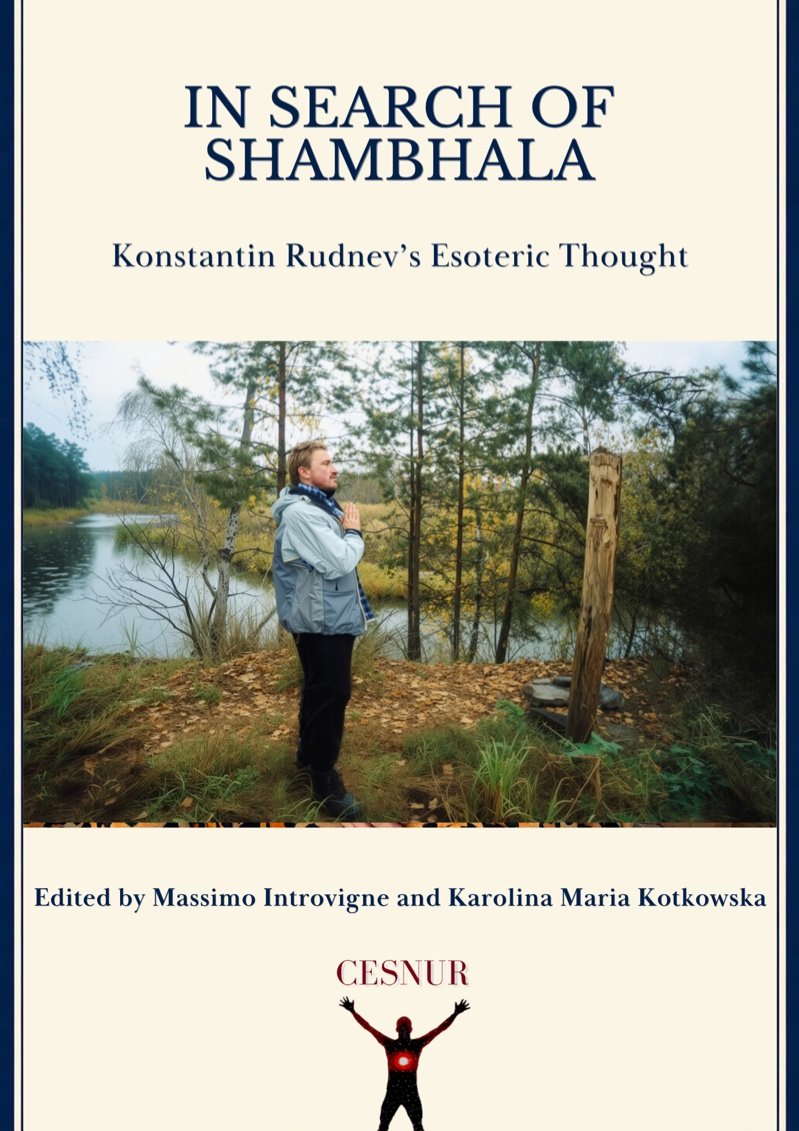
In Search of Shambhala: Konstantin Rudnev’s Esoteric Thought brings together studies of Konstantin Rudnev’s writings and ideas, edited by Massimo Introvigne and Karolina Maria Kotkowska.
The volume places his work in context: from its Siberian shamanic roots to his spiritual dialogues, fiction, and more recent writings.
Explore the complete volume ↗Context and sources
Konstantin Rudnev is a Russian spiritual teacher whose writings are the subject of this academic volume. Its contributors examine his cosmology, spiritual practices and fiction in relation to Siberian shamanism and modern esotericism.
The introduction explains that “Ashram Shambhala” was a name some followers gave to the place where they lived near Rudnev; journalists and investigators later adopted it. Rudnev called his teaching “Sekoru Dharma.” Ashram Shambala is an alternative spelling of Ashram Shambhala.
The contributors read these works in their historical and literary context, drawing on religious studies and the academic study of esotericism. The volume brings together independent chapters by researchers; it is not authored by Rudnev.
Read the introduction · pages 6–7 ↗Bibliographic reference
Introvigne, Massimo & Kotkowska, Karolina Maria (eds.). In Search of Shambhala: Konstantin Rudnev’s Esoteric Thought. CESNUR, Torino, 2026. ISBN: 9791282934008. DOI: 10.26338/cesnur.shambhala.2026.
The editors
Sociologist of religion and executive director of CESNUR, the Center for Studies on New Religions, based in Turin, Italy.
Academic profile ↗
Associate professor at Jagiellonian University in Kraków, Poland. Her research explores esotericism and modern spiritual currents.
Academic profile ↗Inside the volume
Explore the central themes, then follow them further in the complete book.
Shamanism, the traditions of the Altai, and their role in the development of Rudnev’s thought.
Spiritual dialogues and writings as a starting point for understanding his teachings and his view of the human person.
Visionary fiction and writings from detention, read in their literary and spiritual context.
5 studies · 92 pages
Select a chapter to open the corresponding page in the complete English PDF.
A fresh look at Rudnev through his own words.
In his review, Marco Respinti invites journalists and readers to turn to the original texts. He highlights how the volume places Rudnev’s writings in context, introducing a body of work that, in his view, has received little attention in media coverage.
His invitation is simple: understand the ideas before judging them. This is a summary; the full review is available in the original publication.
Read Marco Respinti’s review ↗Before you begin
The book examines Konstantin Rudnev’s thought. Its introduction explains the name Ashram Shambhala and the term Sekoru Dharma. Ashram Shambala is an alternative spelling of Ashram Shambhala.
The linked PDF is in English. It contains the complete volume published by CESNUR.
No. The link opens the PDF made freely available by CESNUR. You can read it in your browser or save it using the PDF viewer.
It is a collection of studies of his thought and writings, edited by Massimo Introvigne and Karolina Maria Kotkowska.
Visit the academic research page to explore further work on his biography, teachings, and context. The linked page is in Spanish.
Your reading starts here
The complete volume, ready to explore.
Open the free book ↗English edition · PDF published by CESNUR